The New Creative Studio: How Generative AI Is Changing Visual Content Today
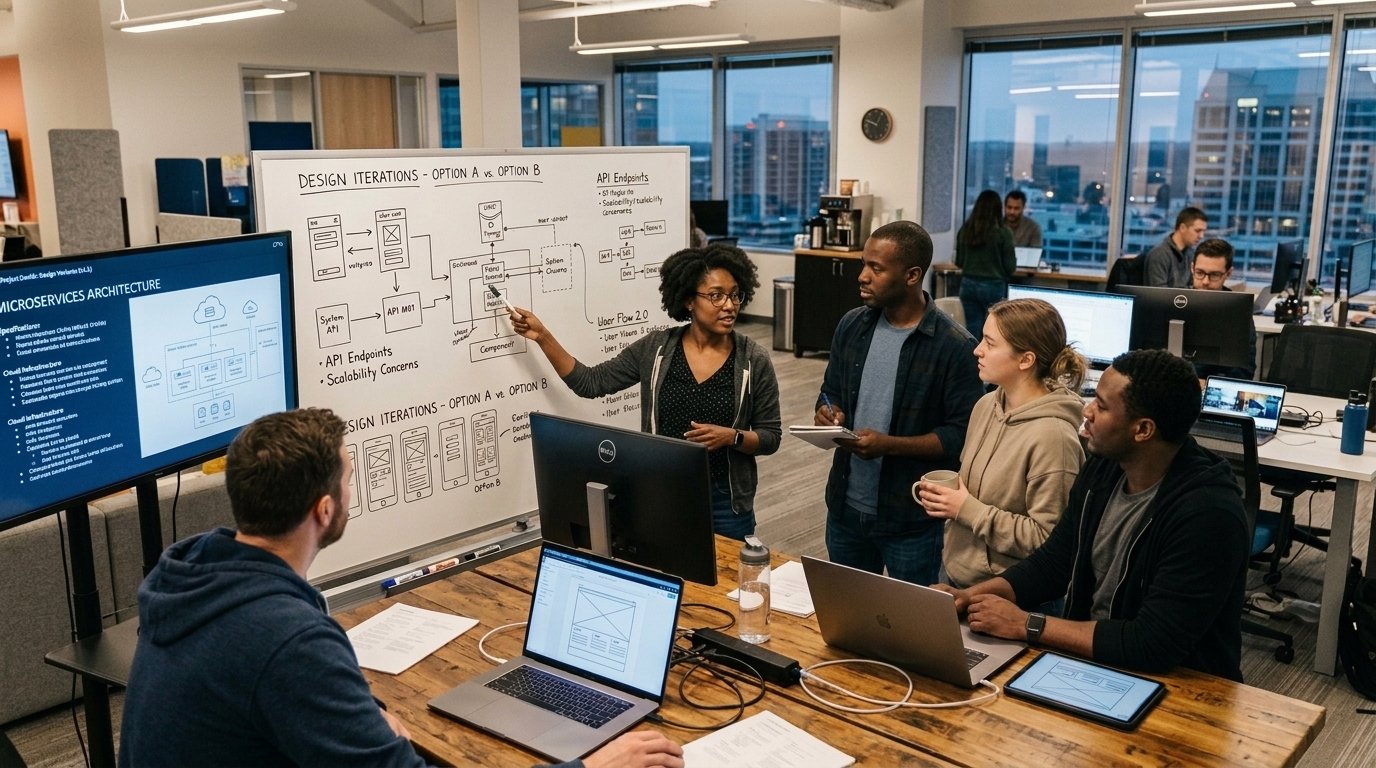
image courtesy of Gen AI - prompt author
Not long ago, creating professional visual content meant hiring specialists. A business that needed product photography, a website banner, an advertising graphic, a short promotional film or a polished social media campaign would usually commission photographers, designers, copywriters, editors, animators, videographers and agencies. The process was slow, expensive and often intimidating for small teams. Generative AI has not removed the need for creative skill, but it has changed where that skill sits. Today, much of the first act of production begins not in a studio, but in a prompt box.
Anything visual can now be imagined, described, generated, revised and refined with AI assistance. Website content, graphics, product images, concept art, storyboards, short videos, explainer clips, advertising variations and branded social posts can be produced far faster than before. What once required a location shoot, lighting equipment, props, a studio, a production crew and a long chain of approvals can now begin with a carefully written instruction: create this object, in this setting, for this audience, in this style, with this mood.
From Outsourced Production to Prompted Production
The most obvious change is cost. Visual production used to carry high fixed costs before the first usable asset appeared. You had to brief a supplier, agree a creative direction, pay for time, book resources and wait for drafts. If the result was not quite right, revisions added more time and sometimes more cost. Generative AI compresses this cycle. The early stages of ideation, mock-up and variation can happen almost instantly. A marketer can test ten campaign directions before lunch. A founder can visualise packaging before speaking to a manufacturer. A product team can turn a rough idea into a set of plausible website visuals before a design sprint has formally begun.
This does not mean every business should abandon agencies or professional creators. It means the boundary between client and creator has shifted. A good creative agency is still valuable for strategy, originality, taste, brand coherence, legal assurance and final execution. But the client is no longer dependent on a third party for every visual experiment. Prompting has become a form of rough production: fast enough to invite play, cheap enough to encourage iteration and flexible enough to let non-specialists participate in the creative process.
The Coffee Mug Example: A Whole Campaign from One Object
Consider a simple coffee mug. In the old model, a brand might commission a photographer to shoot the mug on a table, then ask a designer to create advertising layouts, then hire a videographer to film someone using it. Each stage would involve equipment, personnel, scheduling and post-production. With Gen AI, the same brand can begin by generating a high-resolution image of the mug with a specific label, ceramic texture, lighting style and background. The mug might sit beside roasted coffee beans, a notebook and a window looking out over a rainy London street. A few minutes later, the same mug can be placed on a rustic wooden table in Addis Ababa, surrounded by green coffee cherries and morning light.
From there, the idea can become a story. The prompt can ask for a short cinematic video of a person lifting the mug, inhaling the aroma and drinking coffee sourced directly from Ethiopia. The scene can emphasise a point that is often forgotten in European coffee culture: coffee does not grow in Italy. Italy gave the world espresso culture, design rituals and café theatre, but the plant itself belongs to tropical regions such as Ethiopia, where coffee’s history is far deeper. Gen AI allows that distinction to become visual, immediate and memorable.
In this small example, one object becomes a complete creative universe. The mug is not merely a mug; it is a product shot, a cultural statement, a social media post, a video concept, a packaging mock-up, a landing page hero image and a brand narrative. Gen AI makes it possible to move between these formats quickly, testing what feels persuasive before committing to a final direction.
Prompting Is the New Creative Brief
The prompt is more than a technical command. It is the new creative brief. A weak prompt produces a generic result because it gives the machine no meaningful direction. A strong prompt includes subject, setting, style, audience, emotion, composition, constraints and purpose. Instead of saying, “make a picture of coffee”, a stronger prompt might say, “create a premium editorial product image of a white ceramic mug with a minimalist label, filled with Ethiopian single-origin coffee, placed on a handmade wooden table, morning light, shallow depth of field, warm tones, suitable for a luxury direct-to-consumer coffee brand.”
This is why Gen AI rewards people who can think visually and narratively. The software can generate, but it does not automatically know what is tasteful, truthful or strategically useful. Human judgement still matters. The person prompting must decide whether an image looks cheap or premium, whether a video feels authentic or artificial, whether the brand message is clear or confused, and whether the output respects cultural context. The machine can create endless options, but someone has to choose.
The Rise of the One-Person Production Studio
Generative AI has given individuals the powers of a miniature production company. A solo consultant can produce a polished presentation deck with bespoke visuals. A small café can create seasonal posters, menu photography concepts and short video clips without commissioning a full shoot. A charity can build campaign assets around a cause without waiting months for donated creative services. A start-up can prototype brand identities, product pages and launch videos before raising serious funding.
This is not simply automation. It is creative leverage. The user becomes scriptwriter, photographer, art director, editor and producer. They decide what story is worth telling, what emotion the audience should feel and what visual language fits the brand. Gen AI supplies speed, abundance and technical execution. The human supplies intention.
The result is a democratisation of production. People who previously lacked access to studios, cameras, editing software or design teams can now express ideas in visual form. This matters because visual communication has become the language of digital life. If a business cannot produce strong images and videos, it struggles to be noticed. Gen AI lowers the barrier to entry, making it possible for more people to compete for attention.
Speed Changes the Creative Process
The biggest practical difference is speed. In traditional production, the cost of iteration is high. If you want to test five backgrounds, three models, two lighting styles and four product angles, you must plan for it. In AI-assisted production, iteration is the workflow. You generate, assess, adjust, regenerate and compare. The first result is rarely perfect, but perfection is not the point. The point is that creative exploration becomes continuous.
This changes how teams make decisions. Instead of debating abstractly whether a concept might work, they can look at versions of it. Instead of arguing about a mood board, they can generate a near-finished direction and react to it. This shortens the distance between imagination and evidence. It also makes creative disagreement more productive because people are responding to visible options rather than vague descriptions.
Personalisation at Scale
Generative AI is also changing how brands personalise content. A single campaign can now be adapted for different regions, languages, seasons, customer segments and platforms. A coffee brand could show the same mug in a commuter’s kitchen, a design-conscious flat, a student workspace, a boutique hotel or a mountain lodge. The product remains consistent, but the context changes to match the audience.
This matters because audiences increasingly expect relevance. They do not want to feel that content has been sprayed at them indiscriminately. AI-generated variation allows marketers to create more precise visual messages without multiplying production budgets. The danger, of course, is sameness. If everyone uses the same tools in the same way, the internet fills with polished but forgettable images. Personalisation only works when it is guided by insight, not merely by automation.
What Gen AI Does Not Replace
The excitement around Gen AI can make it sound as though production skills no longer matter. That is misleading. AI can create impressive images and videos, but it can also create errors, clichés and visual nonsense. Hands may look wrong. Text inside images may be unreliable. People may appear too smooth, too generic or subtly unreal. A video may look cinematic but fail to communicate the intended message. A product image may be beautiful but inaccurate. A campaign may be fast but legally risky.
Professional judgement therefore becomes more important, not less. Brands still need people who understand composition, storytelling, audience psychology, intellectual property, ethics, accessibility and brand consistency. A beautiful, generated image is not automatically a good business asset. It must be appropriate, truthful and usable. It must fit the strategy.
Gen AI also does not replace lived experience. If a campaign is about Ethiopian coffee culture, the responsible creator should care about accuracy and respect. The tool may produce an attractive image, but it may also flatten a culture into visual stereotypes. Human oversight is needed to ask whether the work honours the subject or merely uses it as decoration.
The New Scarcity: Taste and Trust
When production becomes abundant, taste becomes scarce. In the past, the ability to make a polished image was itself valuable because the tools were expensive and difficult to master. Now polish is easier to obtain. The challenge is to make something distinctive, credible and emotionally resonant. Audiences are becoming more sensitive to content that feels artificial, over-produced or empty. The question is no longer simply, “Can we make this?” It is, “Should we make this, and will anyone believe it?”
Trust will become one of the defining issues of AI-generated media. Businesses need to be honest about what is synthetic, especially where representation, evidence or product accuracy matters. A generated lifestyle image may be acceptable for mood and positioning. A generated image that misrepresents a product’s size, material, performance or origin is a problem. The more powerful the tools become, the more important it is to use them responsibly.
How Businesses Should Use Gen AI Now
The best use of Gen AI today is not to replace all creative work, but to accelerate the parts of the process where speed and variation matter most. It is excellent for early concept development, mood boards, campaign prototypes, social media variations, product visualisation, internal presentations, storyboards and first drafts of video ideas. It is also useful for small businesses that need competent visual assets but cannot afford a full creative department.
A sensible workflow begins with strategy. Define the audience, message, desired emotion, brand rules and practical constraints. Then use AI to explore visual options. Select the strongest directions, refine them and, where necessary, bring in professionals to polish, verify or produce final assets. The smartest organisations will not treat AI as a magic button. They will treat it as a creative engine inside a disciplined process.
Teams should also build prompt libraries, brand-safe examples and review standards. The quality of output improves when people learn what works. Over time, a company can develop its own style of prompting, just as it once developed house style guides for writing and design. Prompting becomes part of brand management.
The Future of Visual Work
Current Gen AI tools already generate images, graphics and video that would have seemed extraordinary only a few years ago. The next stage will be deeper integration. Instead of using separate tools for writing, images, video, audio and editing, creators will increasingly work in multimodal environments where a single brief can produce a whole campaign: a blog post, a landing page, product visuals, social clips, voiceover, subtitles and alternative versions for different audiences.
That future will reward people who combine imagination with discernment. The valuable skill will not be pressing a button. It will be knowing what to ask for, recognising what is good, understanding what is false, and shaping raw generation into meaningful communication. In that sense, Gen AI does not remove the human from the creative process. It places the human in a more demanding role: director of possibility.
Conclusion: The Studio Is Dead. Long Live the Director
Generative AI has not simply made visual creation faster, cheaper and more accessible. It has exposed something uncomfortable: a great deal of what we used to call “production value” was really access value. The studio, the crew, the camera, the editing suite and the agency meeting were often barriers around creativity, not proof of it. Now those barriers are falling. The person with the sharper idea can compete with the person with the bigger budget.
This is thrilling, but it is also brutal. Gen AI will not make everyone more creative. It will make weak ideas more visible. It will flood the world with competent images, plausible videos and synthetic polish. Average work will become easier to produce and harder to excuse. If everyone can make something that looks professional, then looking professional will no longer be enough.
The winners will not be those who merely learn how to prompt. They will be those who know what is worth prompting in the first place. They will have imagination, taste, judgement and the courage to reject the beautiful but empty image. In the age of Gen AI, the studio is no longer the scarce resource. The scarce resource is point of view. Without that, all we have done is replace expensive mediocrity with instant mediocrity.
Watch The Video